Optimise without weakening the approved architectural ambition.
Value Engineering · Professional B2B Projects
Create more project value before cost is locked into production.
ERGIO reviews approved timber concepts through five practical lenses: material, system, manufacturing, logistics and assembly. The objective is not to reduce quality. It is to remove avoidable complexity and make the final package more predictable to buy, produce, deliver and install.
Best suited toDeveloped B2B projects, multi-unit programmes and technically coordinated timber packages.
Value, correctly defined
The lowest price is not always the lowest project cost.
A timber package may look economical on a material list and become expensive through special machining, too many unique details, difficult transport, slow assembly or late revisions. ERGIO evaluates the package as one connected production and site-delivery system.
Lower avoidable complexity
Identify details, variants and interfaces that consume time without adding proportionate project value.
Improve commercial predictability
Define scope, assumptions and repeatable production logic before procurement and programme commitments are fixed.
Protect the approved design
Recommendations are transparent and returned to the architect and structural engineer whenever their approval is required.
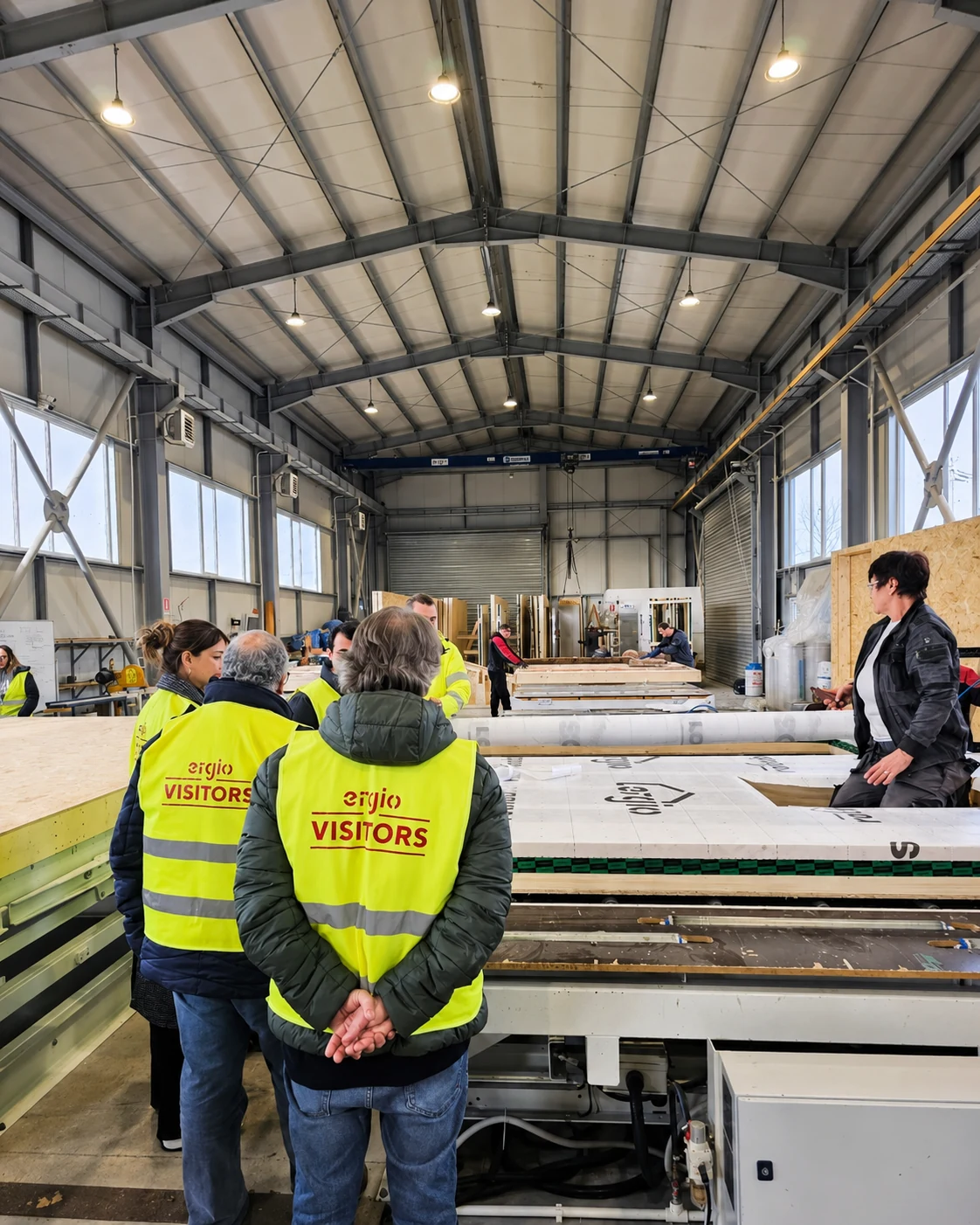
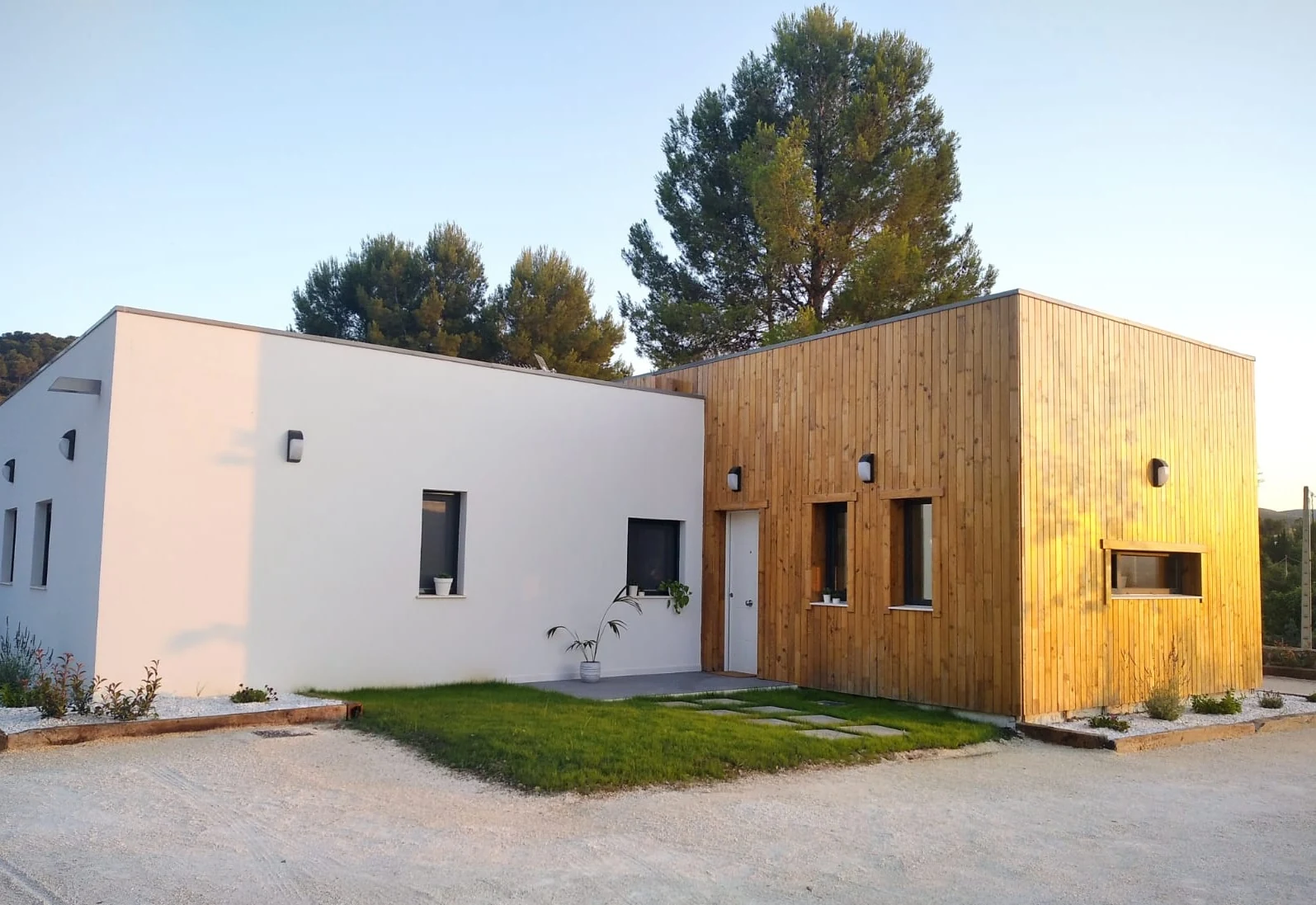
DesignFactorySite
Five optimisation lenses
Evaluate the complete route from model to installation.
Select a lens to see the decisions ERGIO reviews and the type of value those decisions can create.
Material efficiency
Use the right material, section and format where it creates real value.
The review considers structural requirements supplied by the engineer, standard material formats, visible-quality requirements, sheet utilisation, repetitive lengths and the potential for avoidable off-cuts.
- Member and panel dimensions aligned with approved requirements
- Industrial versus visible-quality allocation
- Sheet and insulation module coordination
- Repeated lengths and purchasing logic
- Off-cut and waste-reduction opportunities
System rationalisation
Choose a clear structural and envelope logic for each part of the building.
Complexity often comes from overlapping systems or details that change without a functional reason. A controlled system hierarchy improves coordination and makes responsibilities easier to define.
- Timber Frame, Post & Beam and hybrid interfaces
- Common wall, floor and roof families
- Controlled opening and connection families
- Defined transitions between systems
- Clear package boundaries and exclusions
Manufacturing efficiency
Make every operation accessible, repeatable and verifiable.
The production review examines how geometry becomes machine data, how many unique operations are required and whether a detail can be manufactured and checked reliably.
- Panelisation compatible with production and handling
- Repeatable joints and machining operations
- Tool access and component orientation
- Fewer unique pieces where appropriate
- Clear first-piece and quality-control logic
Transport efficiency
Design the package around real transport and site-access conditions.
Panel and member dimensions, bundle logic and delivery phases influence both cost and site productivity. These constraints should be coordinated before final release.
- Truck and route limitations
- Long-member transport and handling
- Packaging by unit, phase or installation zone
- Load sequence aligned with site needs
- Storage and weather-protection strategy
Assembly readiness
Reduce improvisation by resolving the installation sequence in advance.
The review considers connection access, temporary stability, lifting points, component identification and how the installation team will physically build the package.
- Connection access and fixing sequence
- Component labels and assembly references
- Lifting, crane and temporary-bracing logic
- Weather-sensitive interfaces
- Feedback from the first unit or pilot batch
Transparent decision making
Every option needs an owner, an impact and an approval route.
Value engineering is useful only when the project team can compare alternatives clearly. ERGIO records the manufacturing and delivery consequence; the appointed designers and client decide whether the proposal is accepted.
How we support design teams ↗OpportunityPotential impactApproval owner
Standardise panel widths
Material use, line efficiency and repeated detailing
Architect + structural engineerReduce unique connection types
Detailing time, machining, checking and assembly speed
Structural engineerChange visible/industrial quality allocation
Material procurement and visual finish cost
Architect + clientSplit an oversized panel
Transport, lifting, connection and site sequence
Design team + contractorRephase the delivery sequence
Factory loading, storage, crane use and programme
Contractor + developerWhen to intervene
The earlier the decision, the more options remain available.
ERGIO can contribute at several stages, but late changes may affect approved design, ordered materials, completed detailing or components already in production.
Test the production logic.
Review systems, indicative panelisation, material packages, transport assumptions and major cost drivers.
Highest freedom to optimiseRationalise the package.
Coordinate systems, repeated dimensions, opening families, interfaces and the intended ERGIO supply scope.
Strong optimisation potentialResolve remaining decisions.
Compare defined alternatives before final approval, material commitment and production detailing.
Controlled change windowProtect the approved version.
Changes are possible only through formal impact assessment covering price, material, programme and site consequences.
Change cost is highest
MODEL 01MODEL 02MODEL 03ONE CONTROLLED PLATFORM
Where value compounds
One good decision can repeat across an entire programme.
For multi-unit developments, hospitality portfolios and recurring component supply, value engineering has a multiplying effect. A validated baseline can improve every subsequent unit, batch and delivery phase.
- Controlled model familiesStandard details with authorised, traceable variants.
- Pilot learningFeedback from the first unit or batch before wider release.
- Capacity planningProduction and material demand organised around the programme.
- Repeatable qualityCommon data, checks, labels and packaging logic.
What value engineering is — and is not
Optimisation works inside a clear responsibility structure.
ERGIO contributes manufacturing, material, logistics and assembly knowledge. We do not make unilateral architectural or structural decisions.
- Review manufacturability and package interfaces
- Identify material and repetition opportunities
- Compare production and logistics consequences
- Prepare simplified studies for early quotation
- Return options to the responsible project team
- Replace the appointed structural engineer
- Approve local code or authority requirements
- Change architectural intent without approval
- Guarantee savings before technical review
- Reduce specifications merely to reach a target price
Value review workflow
A structured comparison, not an informal suggestion.
The review is integrated with quotation, acceptance drawings and production release so approved decisions remain traceable.
Receive the baseline
Architecture, structure, specifications, quantities, programme and requested ERGIO scope.
Identify cost drivers
Material, variants, operations, interfaces, transport and assembly constraints.
Develop options
Clear alternatives with assumptions, technical consequence and expected project value.
Coordinate approvals
The architect, structural engineer, client and contractor review the decisions within their responsibility.
Lock the baseline
Accepted geometry, systems, materials, variants and package boundaries are recorded.
Release to production
Approved decisions continue into detailing, machine data, quality control, packing and delivery.
Projects where the review creates the most value
Prioritise programmes where repetition, complexity or package size magnifies every decision.
01
Large-Scale Residential
Model families, repeated details and phased construction programmes.
Explore ↗ 02Serial & Multi-Unit
Controlled variants, pilot units and repeatable manufacturing baselines.
Explore ↗ 03Complex Structures
Custom geometry, connection strategy and hybrid-system coordination.
Explore ↗ 04Hospitality Programmes
Opening-date planning, unit families and phased site logistics.
Explore ↗Value Engineering FAQ
Questions before requesting a review.
Recommendations, scope, timing and commercial impact are confirmed project by project.
At what project stage should ERGIO become involved?+
Early developed design usually offers the strongest balance between available information and freedom to optimise. ERGIO can also review concept information for feasibility or advanced documentation before production release.
Does value engineering mean reducing quality?+
No. The purpose is to remove avoidable cost and complexity while preserving the approved performance and design intent. Any proposed change to materials, appearance, structure or compliance is presented transparently for approval.
Can ERGIO change structural member sizes?+
ERGIO can identify an opportunity and explain the manufacturing or commercial consequence. The appointed structural engineer must analyse and approve any change that affects structural design or calculations.
Can savings be guaranteed before the review?+
No. The available opportunities depend on project maturity, system, specifications, repetition, logistics and existing design efficiency. ERGIO confirms only what can be supported after reviewing the documentation.
Is the service useful for one-off buildings?+
Yes, especially for large, complex or highly coordinated buildings. The strongest multiplying effect usually appears in multi-unit, serial or recurring programmes.
What documentation should be submitted?+
Send architectural drawings or models, structural information, specifications, quantities, variants, programme, project location and the intended ERGIO supply package. The review can then be scoped against the available information.
Bring a developed B2B project
Let us identify where the timber package can create more value.
For a useful first review, include the architectural and structural information, project location, number of units or total area, material scope, variants and target production programme.
- Developers
- General contractors
- Architects & engineers
- Timber specialists
- Hospitality groups
01
Request a value review.
Large, repetitive, technically complex and package-rich projects receive priority.